Participants with Short Bio
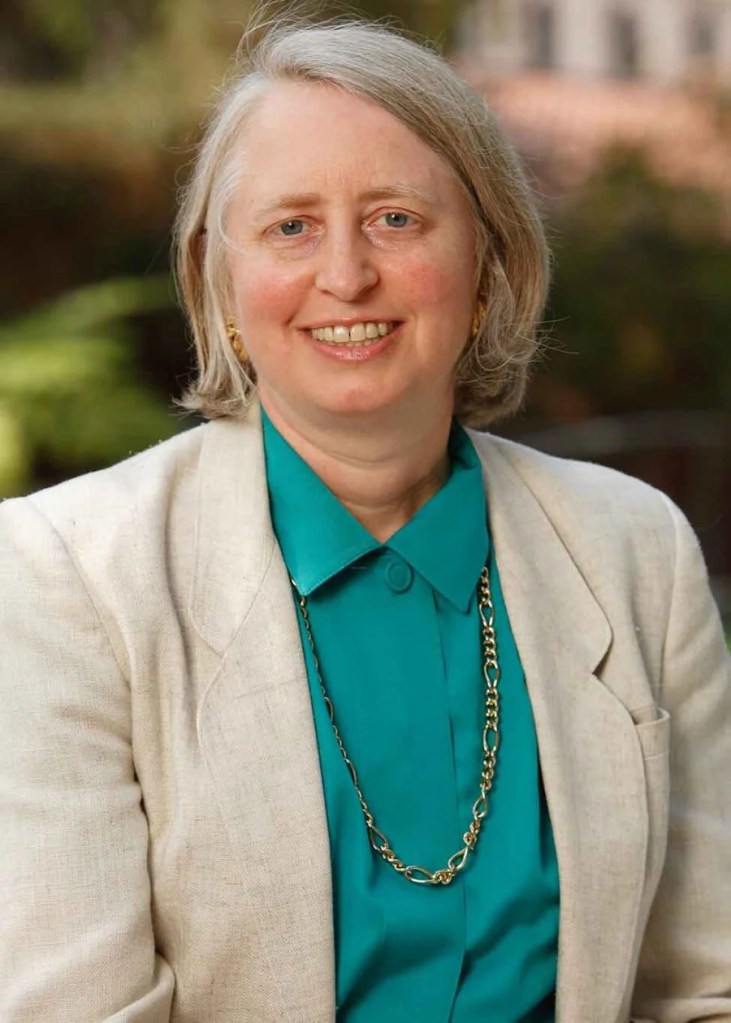
Bettine Birge (University of Southern California)
Bettine Birge is Professor of East Asian Languages and Cultures and History at the University of Southern California. She researches law and gender in China and Inner Asia, focusing on the Song and Yuan periods (10th to 14th centuries). Her interests include women and Confucianism, property rights, comparative systems of marriage, and issues of gender, ethnicity, and status in traditional law. Professor Birge is currently working on a book that examines instabilities and contention over issues of gender, status, and identity in multi-ethnic Yuan society. Her major publications include Women, Property, and Confucian Reaction in Sung and Yüan China, 960-1368 (Cambridge University Press, 2002) and Marriage and the Law in the Age of Khubilai Khan: Cases from the Yuan dianzhang (Harvard University Press, 2017), winner of the J. Franklin Jameson Prize from the American Historical Association.

Dannial T. Cardillo (University of Pittsburgh)
Dannial Cardillo recently graduated summa cum laude from the University of Pittsburgh with a B.A. in Chinese Language and Culture and minors in Turkish and Religious Studies as well as certificates in Asian Studies and Russian, East European, and Eurasian Studies. He has previously conducted research on the role of Christianity and Islam in Yiguan Dao and practitioner’s perspectives on the Unity of the Five Teachings. He also served as an undergraduate research assistant for Dr. Cuilan Liu in the University of Pittsburgh’s Religious Studies department. He will present a portion of this research, discussing Buddhist inmates in the US and their reasons for pursuing litigation.
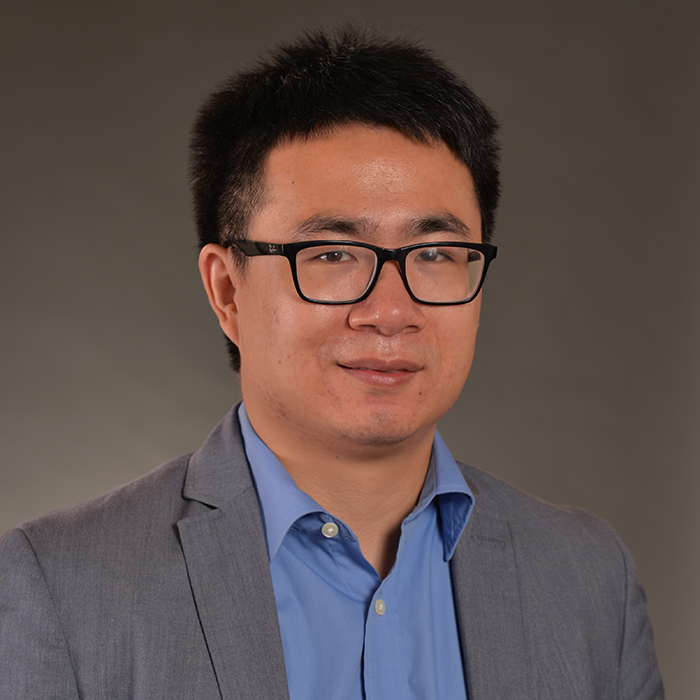
Gilbert Chen (Townsend University)
Gilbert Chen joined the History Department in 2019. In the same year, he earned his Phd in History from the Washington University in St. Louis for his dissertation, “Living in This World: A Social History of Buddhist Monks and Nuns in Nineteenth-Century Western China.” Dr. Chen studies the social, religious, and gender history of Chinese society during the late imperial era. Currently, he is working on a book manuscript project, tentatively titled Manly Monks: Sex, Family, and Community in Late Imperial China, investigating the construction of Buddhist monastic masculinity in the Qing dynasty (1644-1912). Drawing on monastic literature, popular culture, and legal archival research, Manly Monks takes seriously how ordinary monks negotiated masculine identities that straddled different normative gender regimes.
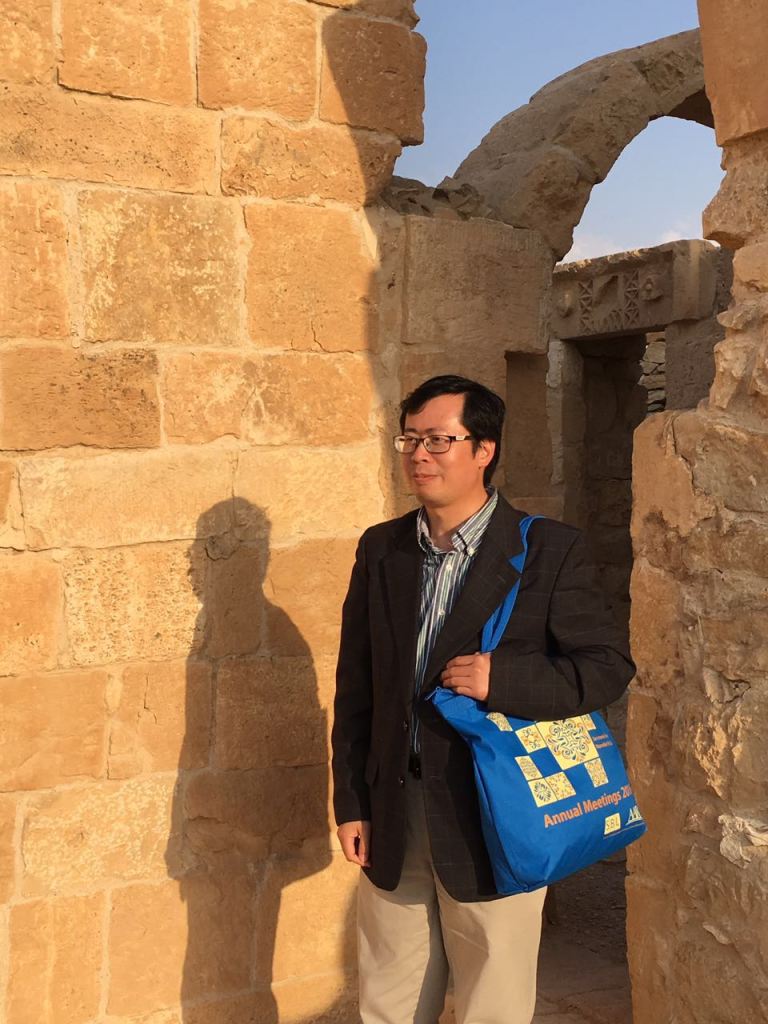
Huaiyu Chen (Arizona State University)
Huaiyu Chen is professor of religious studies at the School of Historical, Philosophical, and Religious Studies, with a joint appointment at the School of International Letters and Cultures. He has also held several visiting positions in North America, Europe, and Asia, such as a membership of the Institute for Advanced Study in Princeton in 2011-2012, a Spalding Visiting Fellowship at Clare Hall of Cambridge University in 2014-2015, a visiting professorship at Beijing Normal University in June-July 2015, a visiting scholarship at Max Planck Institute for the History of Science (MPIWG) in Berlin in June-July, 2018, and a visiting scholarship at Institute for Religions and Ethics of Tsinghua University in August, 2018.

Clark Chilson (University of Pittsburgh)
Clark Chilson is an associate professor in the Department of Religious Studies at the University of Pittsburgh, where he teaches on religion in Japan and the relationship between Buddhism and psychology. He is the author of Secrecy’s Power: Covert Shin Buddhists in Japan and Contradictions of Concealment (2014) and the co-editor of two books: The Nanzan Guide to Japanese Religions (with Paul Swanson), and Shamans in Asia (with Peter Knecht). He has published articles on Shin Buddhism, Kūya, Ikeda Daisaku, non-religious spiritual care in Japan, and Naikan. His publications on Naikan include, “Naikan: A Meditation Method and Psychotherapy,” in Oxford Research Encyclopedia of Religion and “Naikan’s Path” in Pure Lands in Asian Texts and Contexts: An Anthology, as well as several publications in Japanese.

Kate Crosby (University of Oxford)
Kate Crosby is Numta Professor of Buddhist Studies in the Faculty of Asian and Middle Eastern Studies, University of Oxford. She has previously held posts at the universities of Edinburgh, Lancaster, Cardiff, SOAS and King’s College, London. She works on Sanskrit, Pali, and Pali-vernacular literature and on Theravada practice in the pre-modern and modern periods. She has a special interest in pre- and non-reform Theravada meditation. Her books include a translation and study of Santideva’s Bodhicaryavatara (with co-author Andrew Skilton), Theravada Buddhism: Continuity, Identity, Diversity and Esoteric Theravada: The Story of the Forgotten Meditation Tradition of Southeast Asia.

Yasmine Flodin-Ali (University of Pittsburgh)
Yasmine Flodin-Ali is an Assistant Professor of Modern Islam and Race in the Department of Religious Studies at the University of Pittsburgh. Her research focuses on early twentieth century Muslim movements in the United States.

Ernils Larsson (Uppsala University)
Ernils Larsson is a postdoctoral fellow at the Centre for Multidisciplinary Research on Religion and Society, where he is currently working on the project “From Secular Institution to Religious Organzation: Shrine Shinto in Postwar Japan”, funded through the Swedish Research Council. His research focuses primarily on questions related to religion, law, and politics in postwar Japan. Larsson holds a PhD degree in the history of religions from the Faculty of Theology, Uppsala University.

Cuilan Liu (University of Pittsburgh)
Cuilan Liu is Assistant Professor in the Department of Religious Studies at the University of Pittsburgh. Her research focuses on the interaction between Buddhism and law, with a geographical focus on China, Tibet, and India. She is author of Buddhism in Court: Religion, Law, and Jurisdiction in China (Oxford University Press, 2024). Her peer-reviewed articles have been published in History of Religions, Journal of Law and Religion, Journal of Chinese Religions, Journal of the International Association of Buddhist Studies, Journal of the American Oriental Society, Journal of Indian Philosophy et cetera.
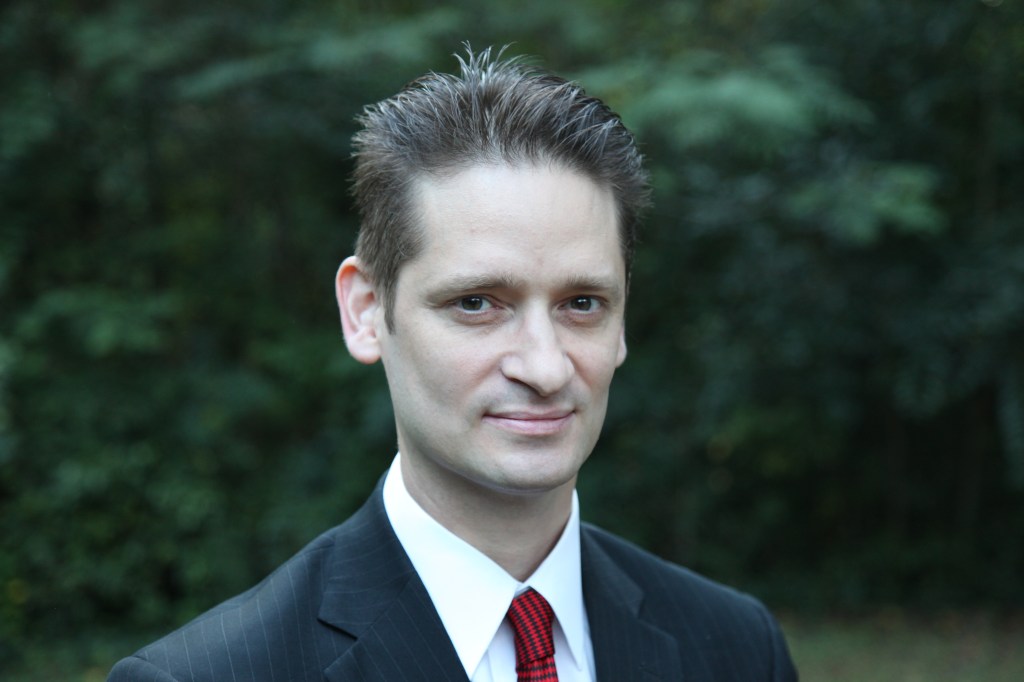
Levi McLaughlin (North Carolina State University)
Levi McLaughlin is Professor at the Department of Philosophy and Religious Studies, North Carolina State University. He is co-author of Kōmeitō: Politics and Religion in Japan (IEAS Berkeley, 2014) and author of Soka Gakkai’s Human Revolution: The Rise of a Mimetic Nation in Modern Japan (University of Hawai`i Press, 2019; in Japanese from Kodansha, 2024), as well as numerous book chapters and articles on religion and politics in Japan.
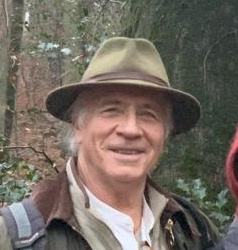
Charles Ramble (EPHE – PSL University, CRCAO)
Charles Ramble is directeur d’études in the History and Philology Section of the École Pratique des Hautes Études, Paris, and director of the Tibetan Studies research team of the Centre for Research on East Asian Civilisations (CRCAO). His research interests include the Bon religion, Tibetan pagan religion, the social history of Tibetan societies, pilgrimage and biography. He is the author or co-author of eight books, including The Navel of the Demoness: Tibetan Buddhism and Civil Religion in Highland Nepal (2008) and three volumes in a series entitled Tibetan Sources for a Social History of Mustang (Nepal) (2008, 2015, 2019).

Paehwan Seol (Chonnam National University)
Paehwan Seol is an Associate Professor of Department of History at Chonnam National University in Korea. He earned his Ph.D. in 2016 from Seoul National University, Korea. He mainly focuses on wide-area and multidisciplinary facets of the Mongol-Yuan empire in social, economic, and cultural fields. He recently expanded his interests to issues surrounding Mongol law, people on boundaries, daily life, material and social networks to understand the Mongol way of political power, and Mongol network impact on East and Central Asia. He published journal articles on the empire and co-authored books such as Daeryuk gwa Megaasia, or The Continent and Mega-Asia (Gwacheon, Korea: Jininjin, 2023), Dong Yurasia mulpum gyoryu wa jiyŏk, or Material Exchange and Regions in Eastern Eurasia (Paju, Korea: Kyungin Publishing, 2022), Saryo ro bonŭn Monggol pyŏnghwa sidae dongsŏ ryoryu sa, or History of Cultural Exchange between the East and the West in the Era of Pax Mongolica, Read from Primary Sources (Seoul: Ewha Womans University Press, 2021). He is in the process of completing a book Kuriltai: Daekan kwollyŏk, umjig’yinŭn sudo ordo, gŭrigo Monggol network, or The Quriltai: The Great Qan’s power, the mobile capital Ordo, and the Mongol network.

Spearlt (University of Pittsburgh)
SpearIt is an internationally recognized scholar and teacher and is a Professor of Law at the University of Pittsburgh School of Law. He is the author of American Prisons: A Critical Primer on Culture and Conversion to Islam (First Edition Design 2017), and his most recent book is entitled, Muslim Prisoner Litigation: An Unsung American Tradition (University of California Press 2023), which examines the history of Muslim prisoner litigation through the lens of OutCrit jurisprudence. SpearIt graduated with a B.A. in philosophy, magna cum laude, from the University of Houston. He also earned a Master of Theological Studies at Harvard Divinity School, Ph.D. in Religious Studies at University of California Santa Barbara, and J.D. from University of California Berkeley School of Law. Currently a Contributing Editor at JOTWELL Criminal Law, he also serves on the American Bar Association’s Corrections Committee and serves as an Affiliate Faculty at the Center for Security, Race, and Rights at Rutgers University.

Weirong Shen (Tsinghua University)
Weirong Shen is Professor of History in the Advanced Institute for Humanities and Social Sciences and the Department of Chinese Language and Literature at Tsinghua University. His specialties include philology and history of the Western Region, with particular focus on Tibetan histories and comparative studies of Tibetan Buddhism and Sino-Tibetan Buddhism. He received his BA and MA in history from Nanking University and his PhD in Central Asian Languages and Cultures from Rheinische Friedrich-Wilhelms-Universität Bonn. His main publications include Philological Studies of Tibetan Buddhist History; Looking for Shangri-la; Imagining Tibet: Monks, Living Buddha, Lamas and Esoteric Buddhism in Cross-cultural Visions; Texts and History: Formation of the Historical Narratives of Tibetan Buddhism and Construction of the Sino-Tibetan Buddhist Study; and Spread of Tibetan Buddhism in the Western Regions and Central Plains: Preliminary Collection of Studies on Dacheng Yaodao Miji .

Benno Weiner (Carnegie Mellon University)
Benno Weiner is a historian of Modern China, Tibet and Inner Asia. His work focuses on the ethnopolitics of twentieth-century state and nation building along China’s ethnocultural frontiers. It is is driven by an otherwise unremarkable observation: that the prolonged, violent, and incomplete processes by which dominions of the Qing Empire were remade into integral parts of the consolidated Chinese state, and by which the disparate peoples who inhabit those areas were minoritized, marginalized, excluded, and even eliminated, are among the key underexplored and unresolved questions of modern Chinese history. Dr. Weiner is author of The Chinese Revolution on the Tibetan Frontier (Cornell UP, 2020) and co-editor of Conflicting Memories: Tibetan History under Mao Retold (Brill, 2020).
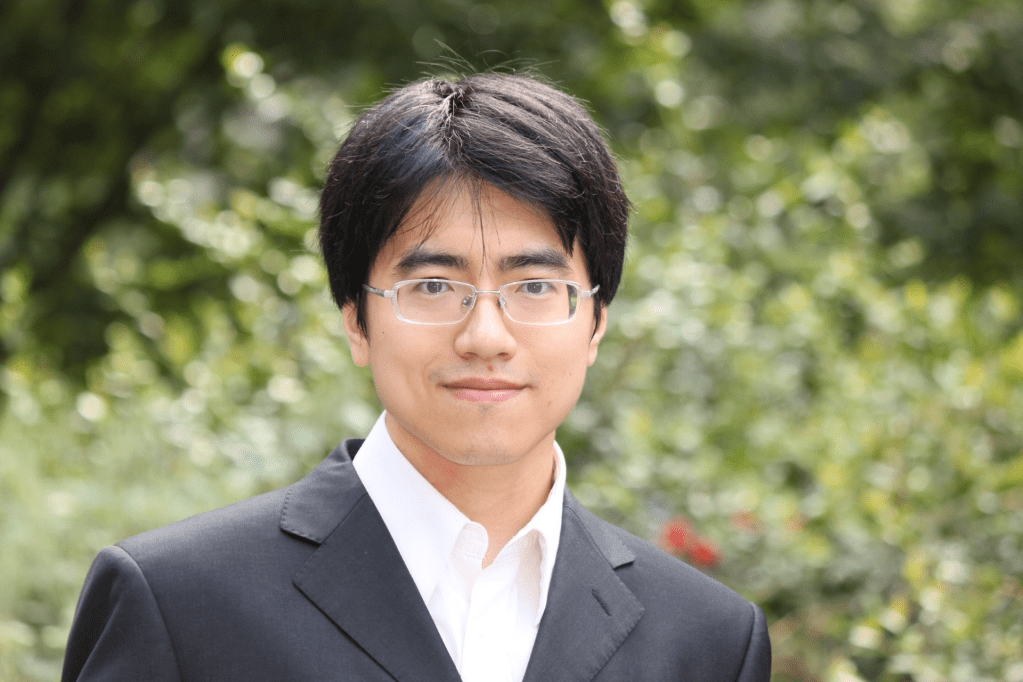
Taisu Zhang (Yale University)
Taisu Zhang is a Professor of Law at Yale Law School and works on comparative legal and economic history, private law theory, and contemporary Chinese law and politics. He is the author of two books, The Ideological Foundations of Qing Taxation: Belief Systems, Politics, and Institutions (Cambridge University Press, 2023), and The Laws and Economics of Confucianism: Kinship and Property in Pre-Industrial China and England (Cambridge University Press, 2017). These are the first two entries in a planned trilogy of books on the institutional and cultural origins of early modern economic divergence. The final entry, tentatively titled The Cultural-Legal Origins of Economic Divergence, is currently in progress. The Laws and Economics of Confucianism received the 2018 Presidents Award from the Social Science History Association and the 2018 Gaddis Smith Book Prize from the MacMillan Center for International and Area Studies. In addition, Zhang has published articles, essays, and book chapters on a wide array of topics, winning awards from several academic organizations, and is a regular commentator on Chinese law, society, and politics in media outlets.
 Cuilan Liu